
During the late 80s and early 1990s, Manchester was a city transformed by its music scene.
During a fleeting but potent time, the club scene, fashion and culture all became entangled to make the city - labeled Madchester - the epicenter of cool.
"It reached a stage where about a third of the office would decamp to Manchester every Friday night," said a ex-music press writer and BBC Radio 6 Music DJ. "They'd pack up and go to Manchester and you wouldn't see them again until Tuesday or Wednesday the next week, clearly having enjoyed themselves."
The second summer of love - as it became known - blazed for a few years, taking in legendary spots from the Hacienda onwards, before burning out... blazing a trail for the rise of Britpop.
Fast forward 35 years, Manchester appears to be having a fresh chapter, musically-speaking, as many artists, fans and industry executives once again head north.
A Cluster of Significant Ceremonies
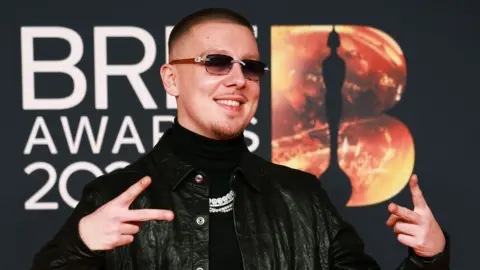
In recent weeks, the city was the venue for the prestigious BRITs - moving the ceremony from London for the initial time in its near 50-year history.
Come Thursday, the recently opened Co-op Live arena - which has already been booked for the Brits again for next year - will also stage the Music of Black Origin Awards for the first time.
And from Wednesday until Saturday, the 6 Music Festival returns to its now fixed 0161 residence.
Does this mark Manchester regaining its status as the UK's musical hotspot?
'Shift of Power'
The city-region's Mayor believes this is the case.
He states that "ultimately, we are witnessing a movement of influence, with momentum shifting into Manchester".
He continues: "This goes beyond those major ceremonies coming, a growing amount of up-and-coming creatives is deciding to establish Greater Manchester their home."
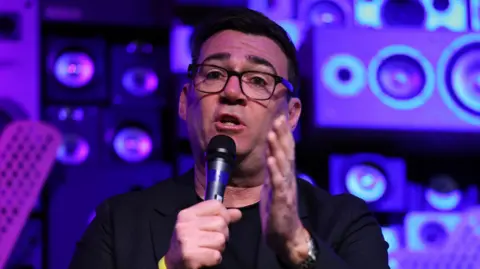
He praises the trade organisation which runs the Brits for having staged a string of community-focused satellite events in the city.
"The BRITs provided more than just a glamorous night," he says. "They built bridges into local areas."
The leading trio of music labels are all still headquartered in London. The mayor says he would "welcome a big label to have a significant operation here in the city".
His announcement last week of the introduction of nocturnal transport from the city centre is, according to a Music Venue Trust representative, "the best thing" for concert-goers and clubs both.
'Secret Sauce'
Although some parts of Manchester are still among areas facing challenges, it is recognised as one of the quickest developing city-region economies in the country.
A chief commercial officer who moved up from London five years ago, formerly of a major London arena, said bringing the Brits to Manchester was "the primary goal" when opening the biggest new indoor arena in Europe.
"It has certainly revitalized the ceremony, being up here," she said of the event, which reportedly attracted a record-breaking worldwide viewership.
Whereas big events can be "hidden" in a massive metropolis like London, she says, the "fun secret sauce" that Manchester brings - including public art installations and pop star tram announcements - "really came out".
The "exceptional effect" of having the Brits "adopted by" Manchester was also highlighted.
The "world class facilities", combined with its "historic artistic dynamism" and sonic legacy made the move north feel like "a logical development".
'Sustainable Growth'
The MOBO Awards have ventured beyond London before. Over the past decade, it has traveled north to the likes of Leeds, Liverpool and Newcastle.
Manchester-born MC Aitch is in the running for best hip-hop artist at this year's ceremony in his home city, where he will also take to the stage.
Aitch was spotted as a youngster by a local entrepreneur, while spitting bars at a local open mic night.
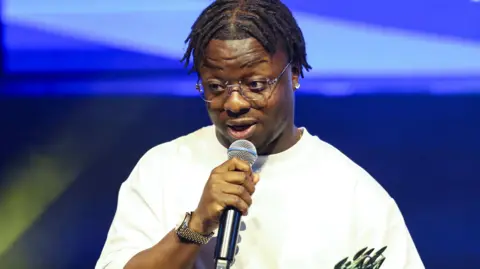
He decided early on to resist the pull of London and to run his music business from Manchester, a place which he said "possesses a unique quality" that "is impossible to copy elsewhere".
"Crucially, it's about building for the long term," he said.
He believes the current excitement around the city has been "evidence" to the decision he made to stay, a decade ago.
'Intergenerational'
However, challenges remain, as a Mancunian singer points out.
The artist playing the festival thinks it's great that Manchester is "receiving attention". But, she asks: "How many northerners are actually getting nominated?"
Only one of this year's nominated artists at the BRITs actually was from Greater Manchester.
And beyond Aitch, there are only a small number of northerners nominated for a Mobo this year too.
The artist thinks there is still a "gap" between the investment in grassroots music infrastructure in the north and south.
"Furthermore, she alerts to the 'peril' of 'simply lifting something out of London and just dropping it into Manchester and assuming it's going to work' when 'the local culture is entirely distinct'."
If the music world is relocating from London again this week, then it needs to "contribute to the region", she adds, and not just pay it "lip service".

The singer will perform at a well-known city venue for the event's showcase night. She has recently performed with city legends and underlines the "genuinely spanning ages" and "collaborative" make-up of the city.
"I certainly consider myself part of Manchester's new wave, but that's been mentored by the old guard, for sure."
Events like last month's fringe lab were "incredible", she adds, at "trying to integrate into the grassroots culture of the city".
The location puts on gigs but also runs training schemes, training people for careers in jobs like audio production.
A venue director acknowledges it's great for Manchester to be getting these major international events, but at the same time he says: "I question whether this alleged revival ever actually faded from Manchester".
"There's been a continuous development of innovative spirit in this city for 50 years."


